

The Gate of Tears: How the Houthis Sealed the Red Sea and Set the Saudi Pipeline Alight
For most of the past decade the Bab al-Mandab strait was a footnote in the story of the Middle East, a narrow saltwater gap that ships crossed on their way from Asia to the Suez Canal while the world looked elsewhere. This week it became the centre of the story. In a lightning offensive across western Yemen, Houthi forces took the port city of Mocha and then walked onto Perim Island, the volcanic outcrop that splits the strait at its narrowest point. By Friday, 11 September 2026, the group that Iran calls its ally in Yemen controlled the country's entire Red Sea coastline. Within hours, Saudi Arabia announced that drones had struck the kingdom's East-West oil pipeline and that the line had been shut down as a precaution.
I have spent years watching this conflict from the analyst's chair, and I want to be careful about the claims that are flying around. Some of what circulates on social media is exaggerated. But the core of it is real, and the core of it matters: a US and Israeli air campaign against Iran that began on 28 February 2026 has now produced a second front that no one in Washington or Riyadh wanted, in the one place on earth where a single militia can squeeze the energy supplies of three continents.
A Week That Redrew the Map
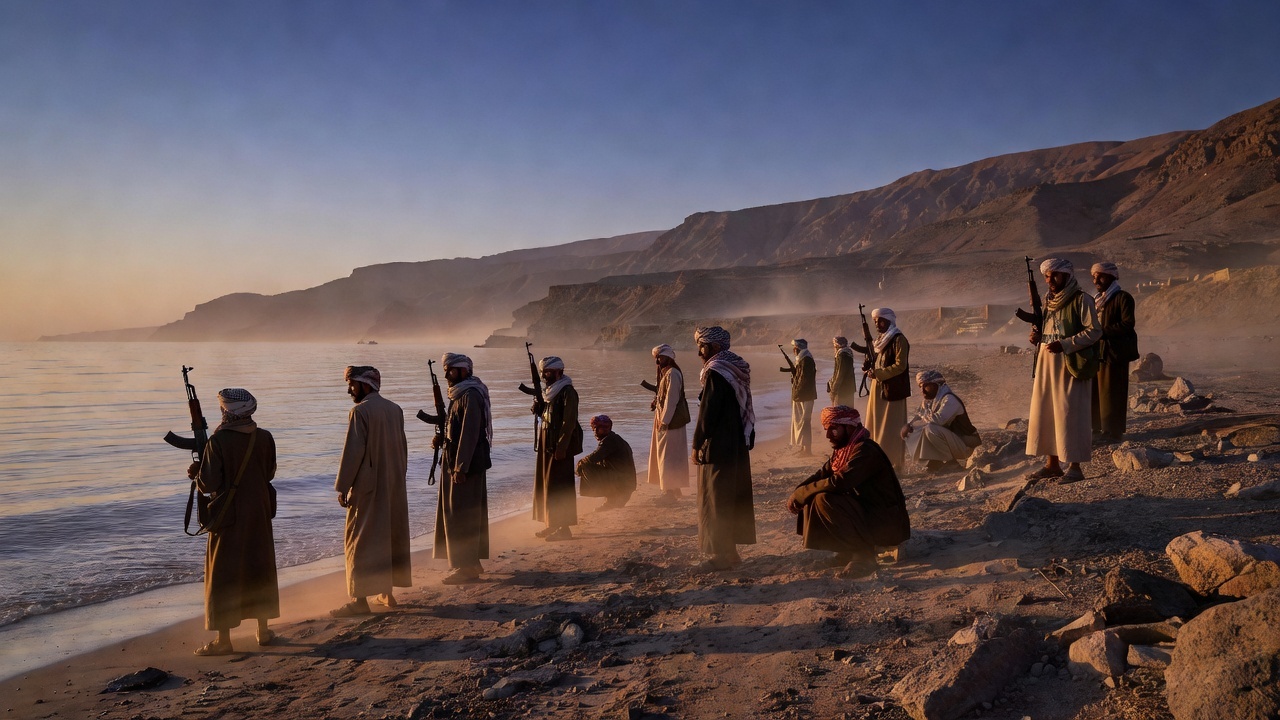
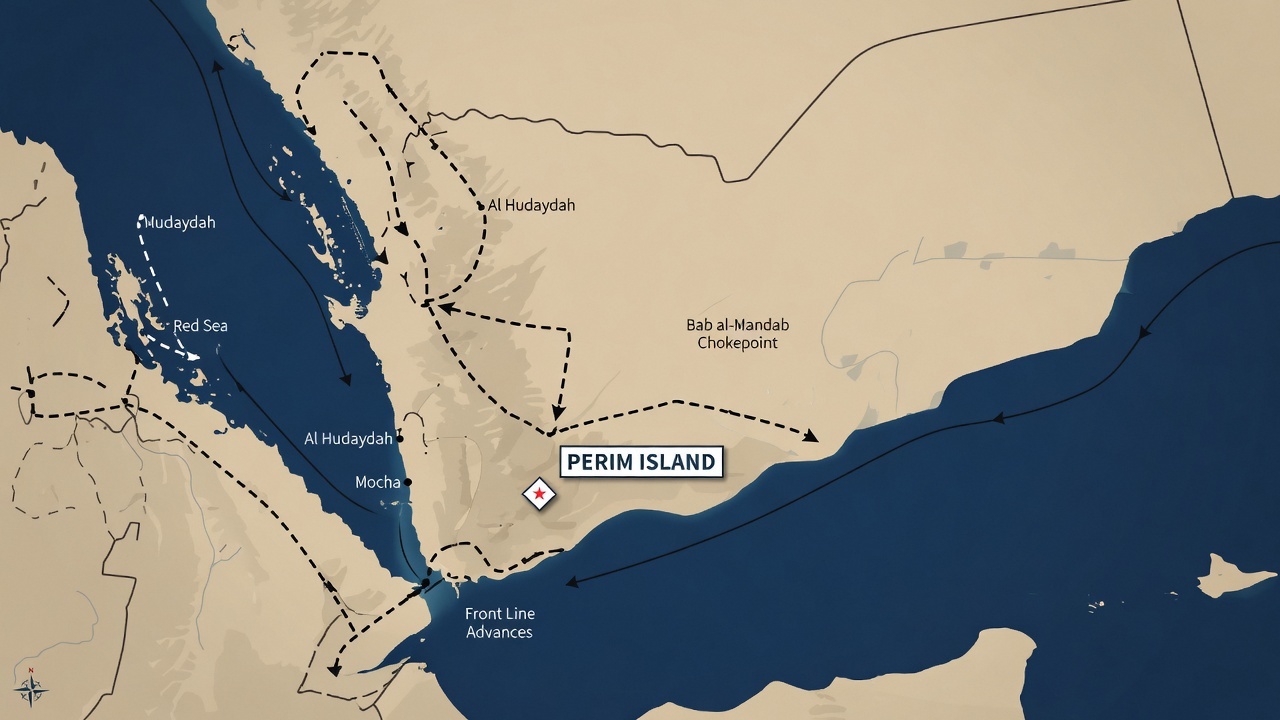
The offensive did not come out of nowhere. It came after months in which the uneasy truce that had frozen Yemen's front lines since 2022 quietly came apart. According to the Wikipedia entry tracking the 2026 offensives, the Houthis moved through Al-Bayda, Al-Hudaydah, Al-Jawf, Dhale, Marib and Taiz governorates in a matter of days. The territorial changes read like a checklist of everything the Saudi-led coalition once fought to prevent: Mokha, the Hanish Islands, the districts of Hays and Al-Khawkhah, Dhubab, and finally Perim.
The Guardian reported that Perim, also known as Mayun, fell after forces loyal to the UN-backed, Aden-based government withdrew. That government, the Presidential Leadership Council, is the one Riyadh supports and bankrolls. Saudi Arabia responded with air raids on Houthi positions around Mocha, but raids from the air cannot hold ground. The Houthis hailed the expulsion of what they call “Saudi enemy” troops from six districts, and for the first time in this war they can credibly claim to command the gateway to the Red Sea.
Who the Houthis Are, and Where They Came From
To understand why this happened, you have to go back further than 2026. The Houthi movement, formally Ansar Allah, grew out of the Zaidi Shia revival in the northern highlands of Saad in the 1990s. Its founder, Hussein al-Houthi, was killed by government forces in 2004, but the idea he left behind was not. Between 2004 and 2010 the Yemeni state fought six separate wars against the group in the north. Each one made it stronger and more disciplined, and each one pushed it further from Sanaa and closer to the idea that the government itself was the enemy.
Then came 2011. The Arab Spring toppled President Ali Abdullah Saleh, and the political transition that followed collapsed into factionalism. In 2014 the Houthis marched into Sanaa, and in early 2015 they pushed south towards Aden. That is when the Gulf states, terrified of an Iranian-aligned movement on their doorstep, assembled the Saudi-led coalition and launched a campaign of airstrikes aimed at restoring the internationally recognised government. The war that followed has killed hundreds of thousands of people, mostly through hunger and disease, and it has never actually ended. It only paused, under a UN-brokered truce in 2022, while everyone waited to see who would move first.
This week, someone moved.
Why Tehran and Sanaa Are Bound Together
The relationship between Iran and the Houthis is the part everyone gets slightly wrong. They are allies, but they are not a puppet and a puppeteer. The Council on Foreign Relations is careful in its language, calling the group “Iran-backed,” which is accurate and also incomplete. The Houthis have their own domestic grievances, their own tribal base and their own reasons to fight Saudi Arabia that long predate any Iranian money.
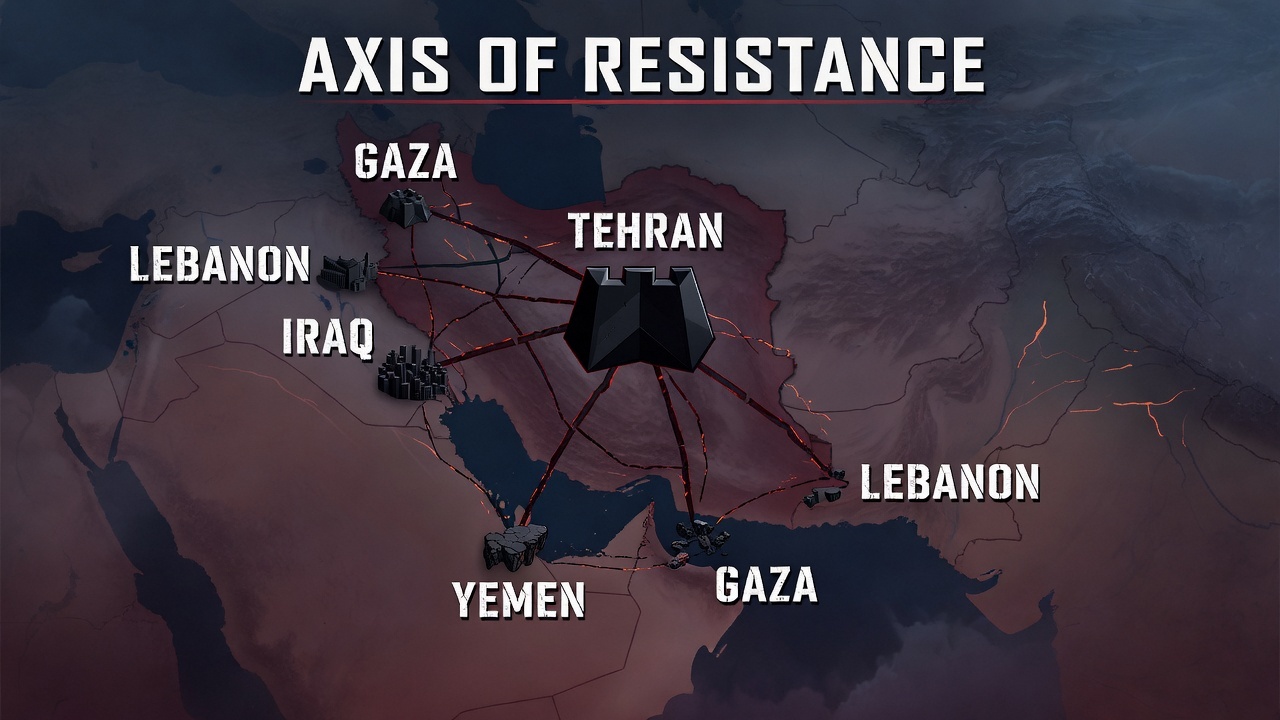
What Iran supplies is what a militia cannot easily make for itself: the technology for longer-range drones and ballistic missiles, training through the Quds Force, and a place in a wider story. That story is the Axis of Resistance, the loose Iran-led coalition that the Wikipedia overview describes as an informal military network across West Asia spanning Iran, Hezbollah, the Palestinian factions and the Houthis themselves. Syria used to be part of it. After the fall of the Assad regime in 2024, it is not.
The axis works because its members share enemies more than they share ideology. Israel, the United States, and the Gulf monarchies are the common thread. When Tehran is under pressure, it asks its partners to open fronts elsewhere. When the Houthis fight, they borrow Iran's rhetoric of divine resistance and repay it with strategic leverage. That bargain is why a movement born in a mountain province can now threaten the global economy. If you want background on how this partnership reaches even into sanctions evasion and smuggling networks, I wrote about the Iraq channel here, and the Houthis sit on the same map.
Iran did not hide its pleasure this week. Its Revolutionary Guard hailed the Houthi seizure of the Red Sea coast as a “divine triumph,” and Iran's vice president sent congratulations. After a US and Israeli campaign that was supposed to break the axis once and for all, Tehran's loudest surviving ally had just handed it the world's second most important oil chokepoint on a platter.
The Pipeline That Was Supposed to Save Riyadh
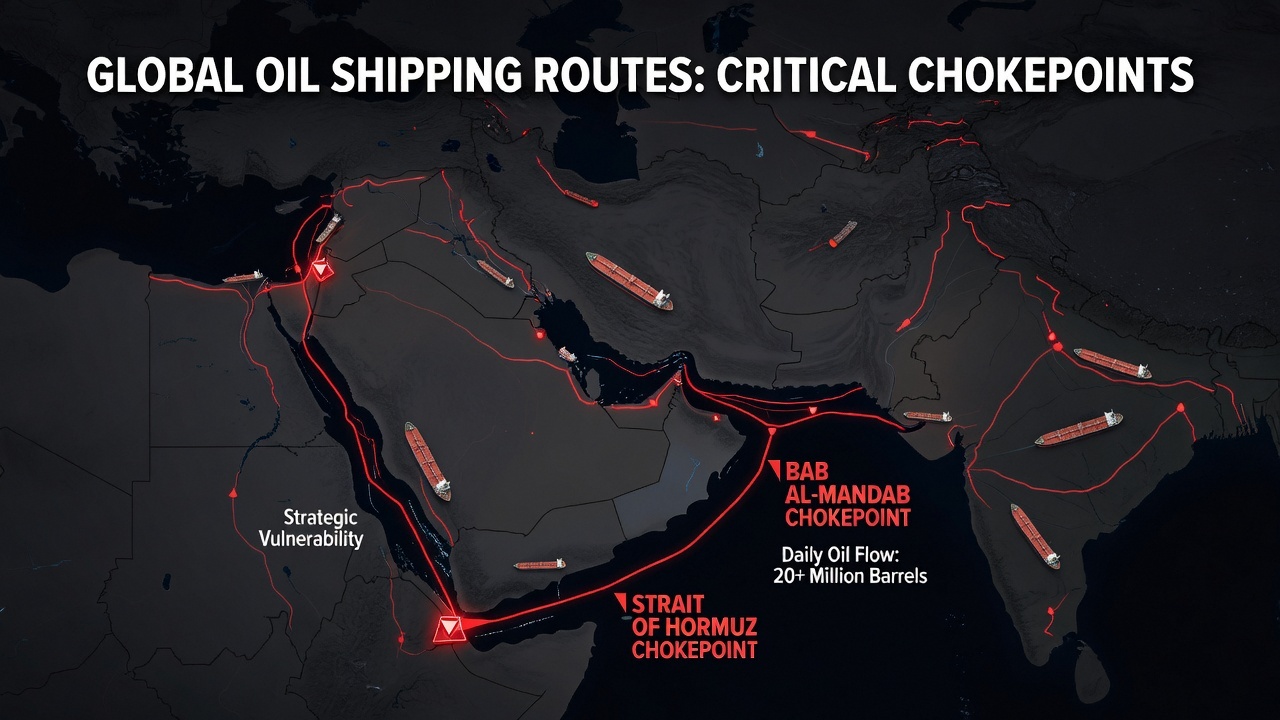
Here is the detail that tells you how serious this is. The East-West pipeline, known as the Petroline, runs 1,201 kilometres from the Abqaiq oilfield in eastern Saudi Arabia to the Red Sea port of Yanbu. It was built in the 1980s precisely so that the kingdom could keep exporting crude even if the Strait of Hormuz were ever blocked. And that is exactly what happened in 2026: with Iran targeting shipping in Hormuz, Riyadh leaned harder on the Petroline as an alternative artery for its oil.
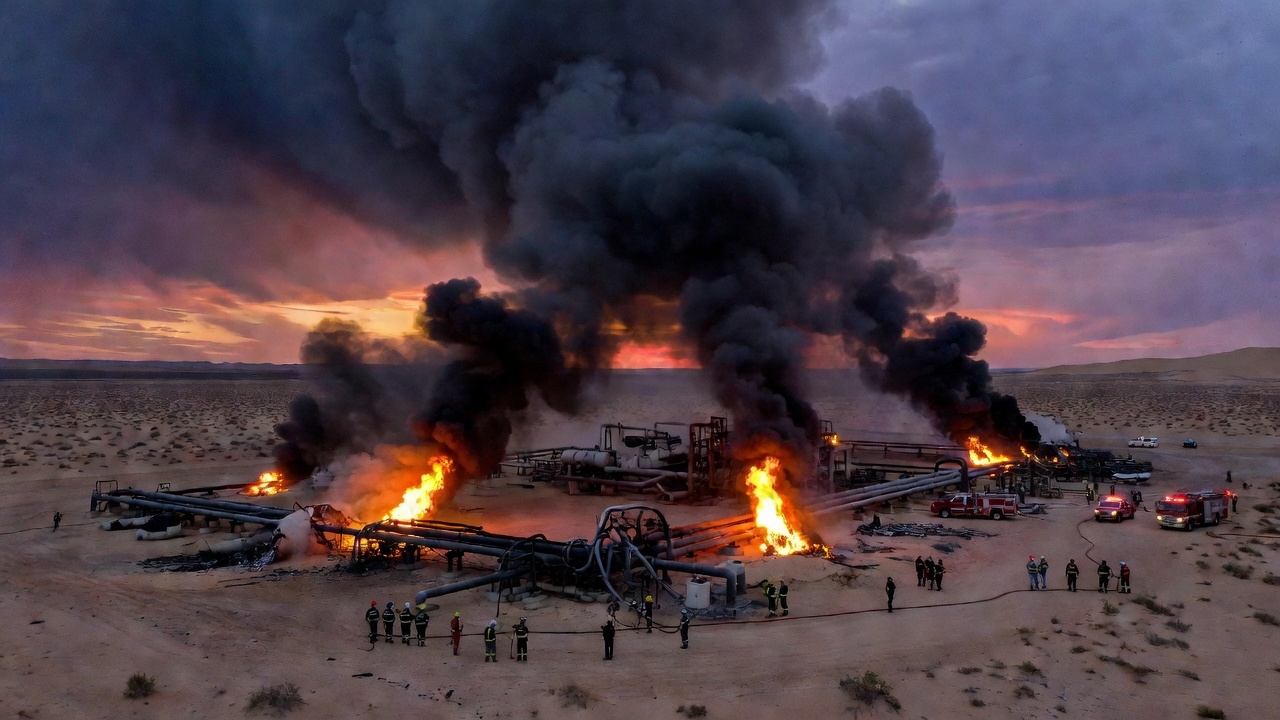
Then the drones came. The Saudi foreign ministry said several drones, launched from Iraq, hit the pipeline in the Riyadh and Madinah regions, causing fires and human injuries. The kingdom suspended the line as a “precautionary measure.” And then came the restrained part: Riyadh said it would not immediately retaliate, to give the Iraqi government room to act. The Guardian and CNN both carried the same account. Watch the phrasing carefully. A drone that reaches Riyadh from Iraqi airspace is not a Yemeni Houthi drone. It is a message sent through Tehran's Iraqi channel, and everyone in the region understood it as one.
I do not want to overstate attribution. The line between an Iraqi militia, the Popular Mobilization Forces and the IRGC Quds Force is deliberately blurred, and that blur is itself the weapon. What is certain is the outcome: the single pipeline built to bypass Hormuz is now offline at the exact moment the Houthis have closed the other door.
The Double Chokepoint
This is where the story stops being about Yemen and starts being about all of us. The Bab al-Mandab strait handles roughly a tenth of the world's seaborne oil and about 12 percent of global goods by volume. Together with the Suez Canal, it is the spine of the Asia-to-Europe trade route. The Strait of Hormuz, at the other end of the Gulf, is the world's single most important oil chokepoint. Until this week, only one of those two doors was under pressure. Now both are.
Think of it as a corridor with a locked door at each end. On one side, Iran and its navy have spent 2026 harassing tankers through Hormuz. On the other, the Houthis now sit on Perim with the ability to launch drones and missiles at shipping with far less sophisticated technology than they needed before, because the target has moved to within easy range. As one analyst quoted by TIME put it, Perim gives the group a vantage point from which even cheap weapons become deadly to merchant traffic.
A Lloyd's List analysis has warned for months that Bab al-Mandab could become the next tanker chokepoint. The EIA has documented how much oil and liquefied natural gas move through these waters. This week that forecast stopped being a forecast. It is worth reading the CFR's earlier examination of the Red Sea threat to the global economy to appreciate how precisely the analysis pointed at this scenario.
What It Means for the World
The consequences are already visible, and they run further than a headline oil price.
First, energy. Oil has pushed past 100 dollars a barrel as the fighting escalated. Diesel has hit a historic high, and that matters far more to ordinary life than the crude benchmark, because diesel moves trucks, trains, tractors and ships. When diesel becomes expensive, everything that is moved becomes expensive.
Second, shipping. When a chokepoint becomes unsafe, insurers react before governments do. War-risk premiums rise, some carriers reroute around the Cape of Good Hope, and voyages that used to take a week add a fortnight. That is not a market blip, it is a permanent tax on trade until the route feels safe again, and it lands most heavily on the import-dependent economies of Europe and East Africa.
Third, inflation and debt. The news flowing through the financial wires this week shows bond yields climbing and central banks recalculating. A second oil shock on top of an unresolved tariff war is the worst possible combination for an already fragile global economy. The BIS and the IMF have spent a decade warning that the world's energy system has no spare margin. This is that margin being tested.
Fourth, the humanitarian ledger. As many as 50,000 Yemeni civilians have fled the new fighting. The UN's 2026 humanitarian plan for Yemen projects that more than 22 million people, roughly half the population, need assistance. The country was already the world's worst humanitarian crisis. It just got worse.
If you want the broader frame for why we keep ending up here, this is the same pattern I described when I wrote about the collapse of the rules-based order into multipolar rivalry and about why the US campaign against Iran was always likely to fail. The tools of the old order, sanctions, carrier groups, coalition air power, are being answered with the tools of asymmetric economics: narrow straits, cheap drones and a willingness to absorb pain that no Western electorate would tolerate.
What to Watch Next
Three things will decide how this unfolds. The first is whether Saudi Arabia's restraint holds. Riyadh is being asked to choose between swallowing an attack on its most strategic pipeline and being dragged fully into a war it never wanted to fight. Its statement about giving Baghdad “an opportunity” is remarkable, and it may not last.
The second is whether Iran's axis can keep opening fronts without overextending. Hezbollah has been degraded, Syria has changed sides in effect, and the Houthis are now the crown jewel of a coalition that has taken heavy losses. A movement that becomes indispensable also becomes a target, and Israel and the United States will be asking whether the Houthi threat to global shipping can be tolerated any longer.
The third is what happens to the world's energy map. Every time a chokepoint closes, capital learns to route around it, and the countries on the right side of the diversion become richer. The war in Yemen, fought with Iranian drones and Saudi money, is quietly redrawing the trade routes of the twenty-first century.
The Gate of Tears was what Arab sailors called Bab al-Mandab, for the perils of the passage. It took one week for the name to become accurate again.
Sources and further reading
- Guardian, Iran’s Houthi allies capture strategic island on vital oil shipping route
- Guardian, Saudi Arabia shuts down oil pipeline blaming drones from Iraq
- Al Jazeera, Iran war live: Houthis control Red Sea coast, Saudi pipeline shut down
- CNN Politics, Saudi oil pipeline shut down after attack triggers fires
- TIME, Yemen, Houthi, Red Sea, Bab el-Mandeb
- CFR Global Conflict Tracker, Conflict in Yemen and the Red Sea
- CFR, Another Hormuz? The Red Sea’s Threat to the Global Economy
- USNI News, Houthis Make Moves on Red Sea
- Britannica, Bab el-Mandeb Strait
- Wikipedia, 2026 Yemen offensives and Axis of Resistance









Leave a Reply