
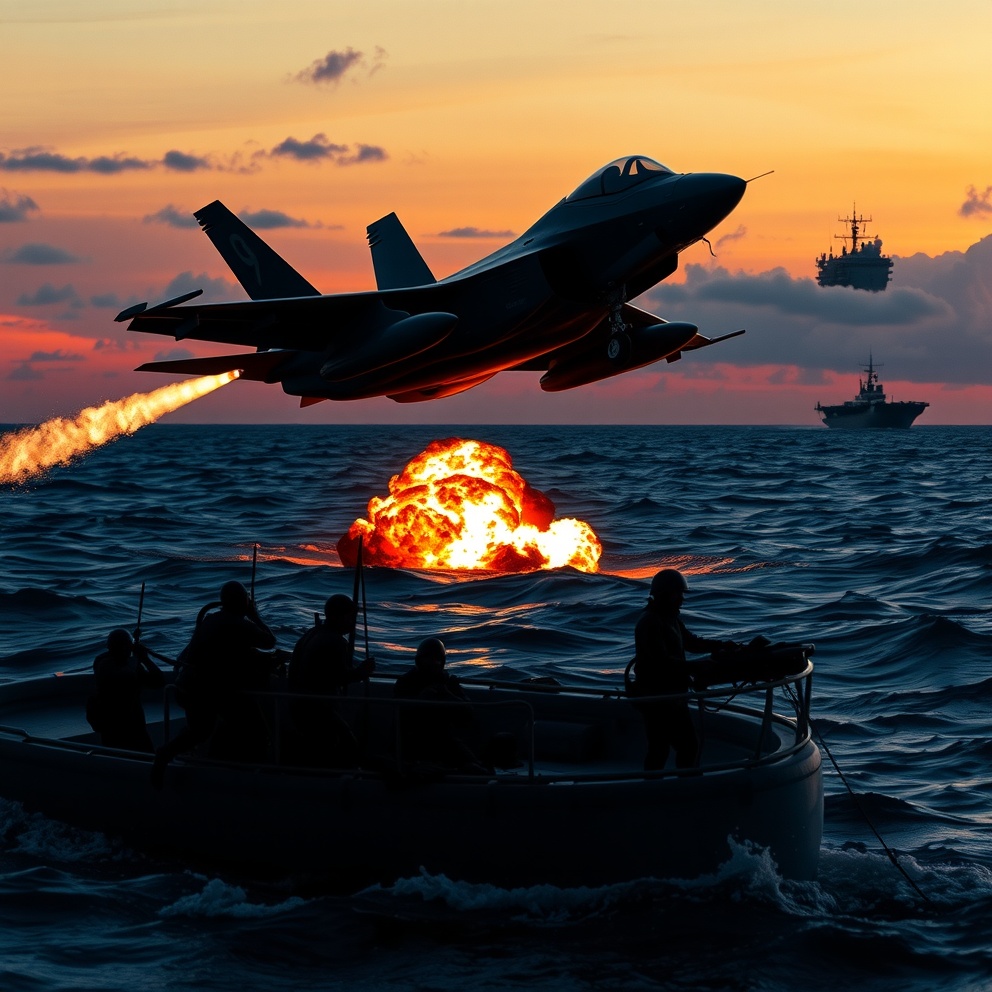
Venezuela-US Tensions Peak: Military Buildup, Strikes & Regime Change Push
Executive Summary
As of November 29, 2025, US-Venezuela relations have reached a boiling point unseen since the Cold War, with the United States under President Donald Trump’s second term deploying carrier strike groups in the Caribbean, conducting 21 lethal airstrikes on suspected drug vessels killing at least 83 people and issuing ultimatums for regime change against Nicolás Maduro’s government. Venezuela has retaliated by mobilizing its 125,000-strong military and 4 million civilian militia, banning international flights, and accusing Washington of plotting an oil grab. This escalation unfolds against a backdrop of Venezuela’s humanitarian catastrophe: over 7 million refugees since 2014, hyperinflation projected at 500% by year-end, and 73% poverty rate. Diplomatic ties are severed, with US diplomats evacuated from Caracas and FAA flight bans citing GPS jamming and military risks. UN officials decry the strikes as potential war crimes, while Maduro’s allies Russia, China, Iran, and Cuba rally behind him. This article dissects the crisis from geopolitical, economic, humanitarian, and strategic lenses, drawing historical parallels and forecasting long-term fallout.
Historical Context: From Oil Ally to Ideological Foe
US-Venezuela ties, forged in the 19th century, have long hinged on oil, evolving into cycles of cooperation and confrontation. The US recognized Venezuela’s 1830 independence from Spain in 1835, cementing a 1836 commercial treaty that laid groundwork for enduring trade. By the mid-20th century, Venezuela emerged as the Western Hemisphere’s top oil exporter, supplying up to 15% of US imports during the 1970s oil shocks. Bilateral trade soared to $50 billion in 2007, underscoring mutual dependence despite frictions.
The rupture began with Hugo Chávez’s 1999 election, launching the “Bolivarian Revolution” a socialist overhaul nationalizing PDVSA oil fields, expropriating industries, and forging ties with anti-US powers like Russia, China, and Iran. Chávez’s rhetoric branded the US an “empire,” peaking during the 2002 coup attempt he blamed on Washington (US denied involvement but criticized his authoritarianism). Post-Chávez’s 2013 death, Nicolás Maduro inherited a crumbling economy, exacerbating shortages through mismanagement and US sanctions.
Trump’s first term (2017-2021) weaponized sanctions, slashing Venezuela’s oil revenue by 99%, recognizing Juan Guaidó as interim president in 2019, and indicting Maduro for narcotrafficking. Biden’s 2021-2025 tenure offered brief 2023 sanction relief for electoral promises, halted by Maduro’s repression. Trump’s 2025 return intensified measures: revoking protections for 600,000 Venezuelan migrants, designating Tren de Aragua and Cartel de los Soles as terrorists, and imposing 25% tariffs on Venezuelan oil buyers.
| Key Historical Milestones | Description | ||
|---|---|---|---|
| 1835 | US recognizes independent Venezuela; 1836 treaty boosts trade. | ||
| 1999 | Chávez elected; nationalizes industries, aligns with Russia/China. | ||
| 2002 | Failed coup; mutual accusations of interference. | ||
| 2013 | Maduro takes power amid oil price crash and protests. | ||
| 2017-2021 | Trump sanctions; Guaidó recognized as leader. | ||
| 2023 | Biden eases sanctions (later reversed). | ||
| Jul 2024 | Disputed election; opposition claims fraud. | ||
| Jan 2025 | Trump’s second term; migrant protections revoked. |
Historical Parallels: Echoes abound with the 1989 US invasion of Panama (ousting Manuel Noriega on drug charges) and 1983 Grenada operation, both justified as anti-narcotics but eyed suspiciously as resource grabs. Chávez-era Venezuela mirrored Castro’s Cuba in anti-US defiance, while Maduro’s “narco-state” label recalls Noriega’s indictments blurring counter-drug ops with regime change.
Current Crisis: Flashpoints and Escalations
Tensions ignited post-Maduro’s disputed July 2024 election, where opposition tally sheets showed Edmundo González Urrutia winning 67% (vs. official 51% for Maduro). US non-recognition, coupled with Trump’s return, triggered aggressive moves: USS Gerald R. Ford carrier group’s Caribbean patrol, B-52 overflights, and airstrikes since September sinking 21 drug-laden “go-fast” boats, per Pentagon claims. Venezuela reports 83 civilian deaths, including fishermen; UN rapporteurs label them “extrajudicial killings” breaching international humanitarian law.
Maduro’s riposte includes airspace closure, militia drills, and rhetoric vowing “asymmetric warfare.” FAA bans cite “erratic GPS signals” from Venezuelan jammers. Economically, PDVSA output languishes at 700,000 barrels/day (pre-sanctions: 3 million), fueling black-market oil sales to China and Iran. Humanitarian toll: 28.6% need food aid; child malnutrition rivals Yemen’s.
From a US security perspective, the White House frames this as opioid crisis retaliation Tren de Aragua’s US gang violence (linked to 500+ murders) and Cartel de los Soles’ alleged FARC cocaine routes. Venezuelan viewpoint sees “imperialism”: Maduro claims strikes target oil infrastructure to starve his regime. Economic lens spotlights Venezuela’s 300 billion barrels of reserves four times Saudi Arabia’s tempting amid global energy transitions. Humanitarian angle: Human Rights Watch documents Maduro’s tortures and 15,000 arbitrary arrests, yet sanctions exacerbate famine, per Oxfam.
Key Players and Power Dynamics
Influential figures shape the standoff:
| Category | Key Figures/Entities | Role/Influence | ||
|---|---|---|---|---|
| Venezuela Government | Nicolás Maduro | Entrenched leader; denies fraud, leverages military loyalty. | ||
| Vladimir Padrino López | Defense chief; commands troops/militia; rumored defection risks. | |||
| Diosdado Cabello | PSUV enforcer; cartel ties alleged. | |||
| US Government | Donald Trump | Authorizes strikes/CIA ops; eyes quick win. | ||
| Marco Rubio (SecState) | Hawkish architect of bounties/sanctions. | |||
| Pete Hegseth (SecDef) | Directs SOUTHCOM buildup. | |||
| Opposition | María Corina Machado | Nobel laureate (2025); galvanizes protests from exile. | ||
| Edmundo González Urrutia | “Legitimate” president-in-exile. | |||
| Allies | Russia/China/Iran/Cuba | Arms/finance; Russia deploys Su-35s. | ||
| Gustavo Petro (Colombia) | Hosts 3M refugees; pushes mediation but slams US “oil lust.” | |||
| Other | UN/ICC; Gangs (Tren de Aragua) | Probes both sides’ crimes. |
Analysis: Maduro’s cohesion relies on patronage; US intel suggests 20% military discontent. Trump’s team Rubio’s Cuba hawkishness, Hegseth’s Fox News bravado prioritizes optics over diplomacy. Regional wildcards like Petro complicate hemispheric unity.
Multi-Perspective Analysis
Geopolitical View: Mirrors Cold War proxy fights; Russia/China’s Maduro backing counters US Monroe Doctrine revival, risking multi-polar escalation. Colombia/Brazil fear refugee floods.
Economic Impact: Sanctions have cost Venezuela $200B+ GDP; US strikes disrupt illicit oil (20% of PDVSA revenue). Global oil could spike 20% if ports close.
Human Rights Lens: Maduro’s atrocities (ICC-warranted) justify pressure, but US strikes risk collateral blowback, per Amnesty International. Poverty at 73% demands neutral aid corridors.
Strategic Risks: Venezuela’s Russian S-400 systems and Iranian drones pose asymmetric threats; US superiority (F-35s vs. aging MiGs) deters invasion but invites guerrilla quagmires.
Potential Scenarios and Future Speculations
Four trajectories emerge, weighted by analysts (e.g., Crisis Group, RAND):
| Scenario | Likelihood | Description | Potential Outcomes | ||
|---|---|---|---|---|---|
| De-Escalation | Medium (30%) | Trump-Maduro call yields reforms; Petro mediates. | Oil flows resume; migration ebbs; democratic thaw by 2027. | ||
| Targeted Pressure | High (50%) | More strikes/CIA ops erode Maduro without invasion. | Defections topple regime; chaos ensues, 2026 refugee peak. | ||
| Internal Uprising | Medium (15%) | Machado sparks revolt; US arms rebels. | Power vacuum; gang wars; neighbor interventions. | ||
| Protracted War | Low (5%) | Militia guerrilla fight; foreign proxies prolong. | Oil at $120/barrel; 1M+ displaced; echoes Syria. |
Future Impacts Speculation: Short-term (2026): Heightened migration strains Latin America; oil volatility boosts US shale. Medium-term (2030): Post-Maduro Venezuela fragments like post-Saddam Iraq warlords control oil patches, delaying recovery. Long-term: Erodes US credibility if quagmire; bolsters BRICS if Maduro survives, accelerating de-dollarization. Optimistically, a transitioned Venezuela rejoins OAS, stabilizing hemisphere energy. Pessimistically, conflict draws Russia deeper, presaging Taiwan-like flashpoints. Polymarket odds (clash by Dec: 45%) and SOUTHCOM posture signal 60% chance of intensified ops by Q1 2026. Historical precedent warns: Panama succeeded surgically, but Libya bred anarchy Venezuela’s oil curse amplifies stakes.





Michał
the US isn’t striking “drug vessels” out of moral outrage over opioids; those 21 airstrikes, killing 83 “suspects” (conveniently labeled civilians by the UN), are precision hits to cripple PDVSA’s shadow fleet, ensuring Venezuela’s 300 billion barrels of reserves four times Saudi Arabia’s stay off the free market and funneled into black-market deals that suit Washington’s narrative. Trump 2.0 revoking migrant protections for 600,000 Venezuelans? That’s not tough love; it’s engineered chaos to flood the southern border, justifying endless SOUTHCOM buildup and the revival of the Monroe Doctrine as a thinly veiled resource grab, echoing Panama ’89 and Grenada ’83, but with F-35s and drone swarms this time.
Look at the historical sleight-of-hand: Chávez nationalizes oil in 1999, cozies up to Russia/China/Iran, and suddenly the US “discovers” a narco-state. Fast-forward to Maduro inheriting the mess post-2013 oil crash hyperinflation at 500%, 73% poverty, 7 million refugees and Biden’s brief 2023 sanction relief gets yanked after electoral fraud claims. Coincidence? Hardly. This is classic hybrid warfare: sanctions slash oil revenue by 99%, starve the population (Oxfam admits it worsens famine), then blame the regime while Guaidó’s “interim presidency” fizzles into exile irrelevance. And now, with Rubio as SecState and Hegseth at Defense, we’re seeing CIA fingerprints all over those B-52 overflights and USS Gerald R. Ford patrols aren’t patrols; they’re rehearsals for a color revolution 2.0, propping up Machado and González as the “legitimate” puppets.
But here’s the real conspiracy layer: Russia’s Su-35s, China’s financing, Iran’s drones, and Cuba’s intel aren’t just alliances they’re countermeasures to a deeper plot. Remember, Venezuela’s GPS jamming and militia mobilization (4 million civilians? That’s asymmetric warfare on steroids) mirror Syria and Yemen, where US strikes create quagmires to bog down rivals. Petro in Colombia calling out “oil lust”? He’s onto it, hosting 3M refugees while Brazil eyes the spillover. The Tren de Aragua “terrorist” label? Sure, they’re violent, but linking them to 500+ US murders is blowback manufacturing export the instability you created via sanctions, then bomb to “fix” it. UN war crimes probes? Toothless theater, as always.
From my vantage as a sociologist who’s tracked urban gentrification and class conflicts in Warsaw where neoliberal policies hollowed out working-class districts much like sanctions have gutted Caracas barrios I’ve seen how economic warfare masquerades as humanitarian intervention. In one project with PAN colleagues, we documented how EU sanctions on Eastern European migrants mirrored US tactics in Venezuela: displace the poor, seize assets, rebrand the ruins as “democracy.” It’s the same playbook, fueling a “new proletariat” of refugees who become pawns in global migration games. Trust me, the parallels are chilling; inequality isn’t accidental it’s engineered.
Now, the scenarios laid out here? De-escalation at 30%? Laughable optimism. Targeted pressure (50%) leads straight to internal uprising (15%), fracturing Venezuela into Iraq-style warlord fiefdoms controlling oil patches. Protracted war (5%) is the wildcard, spiking oil to $120/barrel and accelerating BRICS de-dollarization Russia and China aren’t backing down; they’re positioning for a post-US multipolar world. Long-term? Eroded US credibility if it quagmires, or a puppet regime handing reserves to ExxonMobil if Maduro falls. Polymarket at 45% clash odds by December? Underestimates the script.
So, I ask you: if this is truly about drugs and democracy, why no strikes on Colombian cartels (bigger players) or US banks laundering the proceeds? And what happens when Tren de Aragua links are “proven” to infiltrate US cities martial law pretext? Discuss below the truth is bubbling up, but only if we connect the dots.