HolikStudios Media Group - https://holikstudios.com
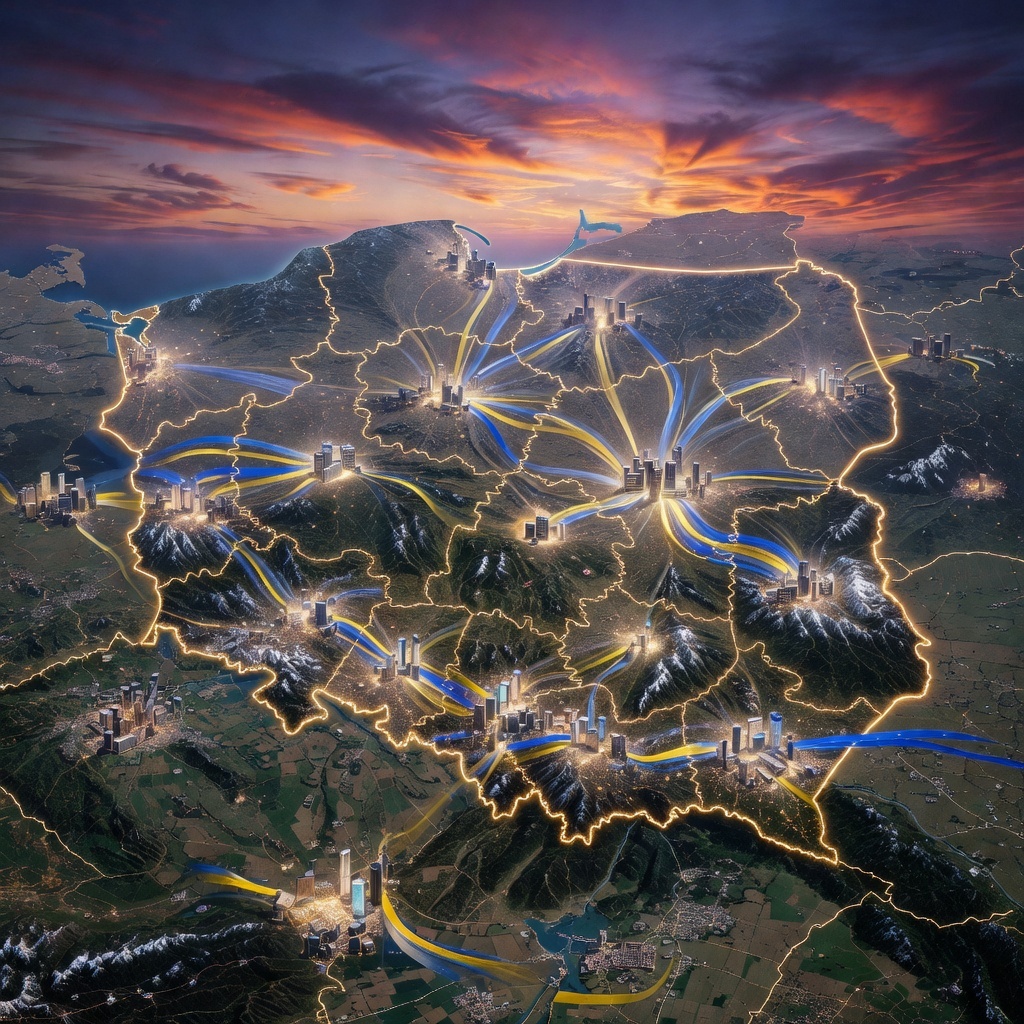
Strip away the speeches and the summit handshakes, and European geopolitics in the twenty first century keeps coming back to the same stubborn fact: a large part of its future is decided in one place. Poland. The country sits at the hinge of the continent, where Western Europe meets the East, where the European Union meets the borderlands of Russia and Ukraine. Its position is not a convenience. It is the central fact of European security, and every shift in the balance of power runs straight through it.
This is not a new idea, but it is an urgent one. Wars, energy crises and the collapse of old assumptions have dragged Poland back to the centre of the map. To understand where Europe is heading, you have to understand the strategic role Poland plays in it. That is exactly what this article sets out to do.
The Geography That Cannot Be Ignored
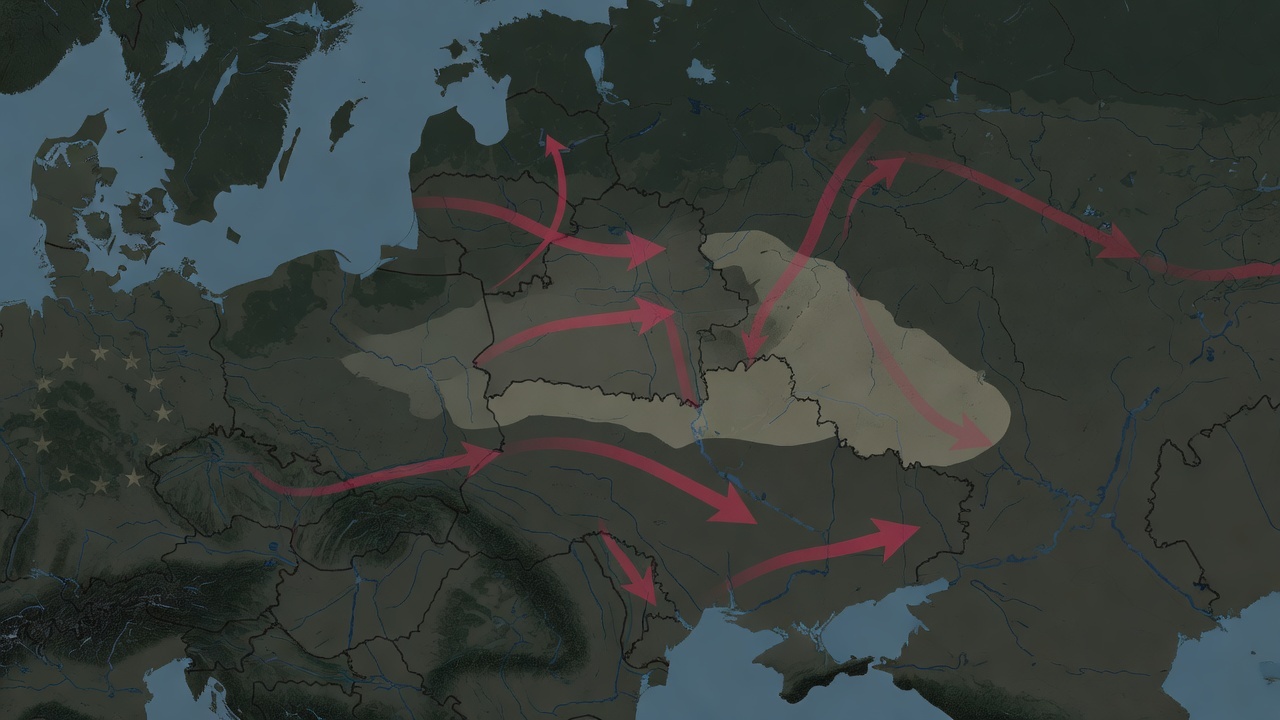
Look at a map of Europe and Poland barely needs an introduction. It is a vast flat plain running between the Baltic Sea in the north and the Carpathian mountains in the south. There are no natural barriers to hide behind. For centuries this flatness made it a highway: armies, merchants, nomads and empires all crossed it, and Poland was caught in the middle of nearly every continental conflict that mattered.
That geography has never stopped being strategic. Poland is the largest country between Germany and Russia, and it borders Ukraine to the east. In practical terms that means it is the front line of the European Union and of NATO. When Russia presses westward, Poland is the wall it meets first. When the EU wants to secure its eastern border, Poland is where that security is built. It is simultaneously a buffer and a bridge, and both roles are essential.
The Current Crisis Has Put Everything on the Table
The war in Ukraine changed the European order in ways that are still unfolding. For Poland, it was existential. The invasion across its eastern border turned a managed neighbourhood into a live conflict zone, and Poland became the primary hub for refugees, for military support crossing into Ukraine and for the logistics of an entire continent’s response. Suddenly the strategic role we are describing was not theory. It was daily reality.
We have covered this crisis from several angles, and they all point the same direction. The high stakes of the Ukraine Russia negotiations, the shifting leadership in Ukraine’s war effort, and the specific pressures Poland itself faces are not separate stories. They are the same story: a country positioned at the fault line, forced to act fast because geography gave it no choice.
Poland’s Key Position Between Europe, Russia and Ukraine
Search for the topic and one phrase keeps recurring because it captures everything: Poland’s key position in Europe, Russia and Ukraine. It is the phrase most people use when they try to explain why events in Warsaw matter in Washington and Beijing alike. The reason is straightforward.
To the west, Poland is a committed member of the European Union and NATO, a reliable anchor of the Western alliance. To the east, it faces a resurgent Russia that wants to rebuild a sphere of influence over its former neighbours. And between those two, Ukraine fights for its own sovereignty, with Poland as the corridor through which Western support reaches it. Poland, in other words, is the link that makes the whole arrangement possible. We laid out the broader shift in our analysis of the collapse of the rules based order and the move toward a multipolar world, and Poland is standing right in the seam of that change.
Why Poland’s Future Is Europe’s Future
Nothing about Poland matters in a vacuum. Its economic growth, its energy policy, its military spending and its political choices ripple outward across the entire EU. A strong, stable Poland pushes the whole eastern flank of the alliance forward. A weakened or uncertain one leaves a gap that exactly the wrong actors would love to exploit.
This is why the question of Poland’s future, a phrase that shows up in search queries about the country’s trajectory, is really a question about Europe’s future. We have written about the broad challenges and the specific pressures in our piece on the geopolitical challenges facing Poland, and the pattern is consistent: Poland cannot be understood apart from its neighbours, and its neighbours cannot be stabilized without Poland.
The Russia Ties That Refuse to Disappear
For all the talk of European integration, the shadow of Russia hangs over the entire region. Economies remain entangled. Energy supplies, historic grievances and intelligence operations all connect Europe to Moscow in ways that no political declaration fully untangles. The question of ties to Russia, of who depends on whom and what that dependence means, is one of the defining puzzles of the region.
Poland sits at the sharpest edge of that puzzle. It has spent years trying to reduce its dependence on Russian energy, only to find its neighbours more exposed, and the European position on Russia pulls in contested directions. Our examination of how US moves fuel Sino Russian ties and of the US China rivalry reshaping global alignments shows how pressure in one corridor shifts the balance in another. Poland, as the hinge of Europe, feels those shifts first and hardest.
Not Just Security: An Economic and Political Pivot
Strategic importance is not only about tanks and borders. It is about money, trade and influence. Poland has become one of Europe’s most dynamic economies, a manufacturing hub, a logistical crossroads and an increasingly influential voice inside EU institutions. As the balance of power in world trade shifts, Poland’s position as the gateway between the EU and the wider east makes it more valuable, not less. We have covered the lessons of tariff threats for global trade and the realignment of the global order, and Poland is a central player in both stories. It is where the economic future of the continent meets its security future, and both keep colliding on the same stretch of the map.
The Situation in August 2026: What Is Happening Right Now
None of this is abstract. In the summer of 2026 the eastern flank of NATO is the most tense piece of the geopolitical map on Earth, and the news cycle keeps confirming it week after week.
Start with Poland itself. In August, Polish authorities said they thwarted an unprecedented Russian plot to assassinate a Ukrainian or US citizen on NATO soil, the latest in a string of sabotage cases Warsaw has attributed to Moscow since 2022. The same month, Poland prepared to host the first military drills of the “Coalition of the Willing”, the group of nations organized to support Ukraine, while seeking NATO backing for border defense.
On 15 August, NATO and US forces paraded through Warsaw on Poland’s Armed Forces Day, with M1A2 Abrams tanks of the 37th Armored Regiment rolling through the capital as part of the NATO Forward Land Forces Battle Group. The IISS Military Balance 2026 describes the buildup as the most serious fortification of the eastern flank in the Alliance’s history. And the timing is no accident: US intelligence has warned that Russia could strike NATO within weeks, a warning the leaders of Poland and the Baltic states have been repeating for months.
The Diplomatic Front: Trump, Zelenskyy and the Peace Push
On the diplomatic side, 2026 has been dominated by Washington’s attempt to end the war. President Trump met both Putin and Zelenskyy in a burst of rapid fire diplomacy over the summer, and his team claims the talks on security guarantees for Ukraine are close to completion. Zelenskyy praised his White House meeting as productive, with discussions of a joint production of Patriot missiles in Ukraine to blunt Russian air attacks.
Yet the obstacles remain stubborn. Putin reportedly handed Trump a peace proposal that would require Ukraine to withdraw from the Donetsk region, conditions Kyiv and much of Europe reject out of hand, while the front lines in Zaporizhzhia would be frozen. European leaders joined the latest Oval Office meeting in a show of transatlantic unity, repeatedly thanking Trump for his efforts to end the three year war, even as Russian strikes continued to hit Kyiv’s energy infrastructure and kill civilians overnight. The BBC notes that Russia itself keeps complicating any end to the fighting.
For Poland, every one of these developments lands directly on its doorstep. A weaker US commitment, a peace deal that freezes Russian gains, or a NATO distracted by internal divisions would each change the arithmetic on the eastern flank. Poland’s position is therefore not only a military question. It is hostage to the diplomacy unfolding in Washington, Kyiv and Moscow, and to how firmly Europe holds together while it happens.
That is the live context for the strategic argument made throughout this article. Poland is not preparing for a hypothetical. It is preparing for the world that is forming right now, openly saying it is getting ready for the possibility of war while simultaneously serving as the corridor through which Europe supports Ukraine. It is the hinge of the continent at a moment when the hinge is bearing the most weight it has carried in decades.
What Comes Next
Predicting geopolitics is a fool’s errand, and the region has embarrassed more than a few confident forecasts. But the underlying geometry of the situation is stable. Poland sits where Europe bends, and as long as the West and Russia remain rivals and Ukraine remains contested, Poland will remain central. The only question is how well it manages the role it was given by geography.
The strongest version of Poland’s future is a country that locks in its Western alliances, deepens its role as the hub of support for Ukraine, diversifies its energy and economy away from Russian leverage, and uses its growing weight to help shape European policy. The risk is that the pressure becomes too much to absorb at once. Either way, the continent will be watching, because what happens in Poland will, for the foreseeable future, be what happens to Europe.
Why This Story Is Bigger Than One Country
There is a tendency to treat Poland as a regional story, a parochial concern for the eastern edge of the EU. That is exactly backwards. The structure of European security, the credibility of NATO, the fate of Ukraine and the balance between Western institutions and Russian ambitions all run through the same crossroads. Poland is not a footnote to those debates. It is their stage.
Understanding the strategic role of Poland in the EU’s future is understanding the single most important fault line on the continent, and there is no better summary of that role than the analysis we published earlier on exactly this question. Start there, follow the threads we have pointed to across geopolitics, Europe and the Ukraine crisis, and one conclusion keeps returning: whoever controls Poland’s stability controls a decisive piece of Europe’s future.
About the Author

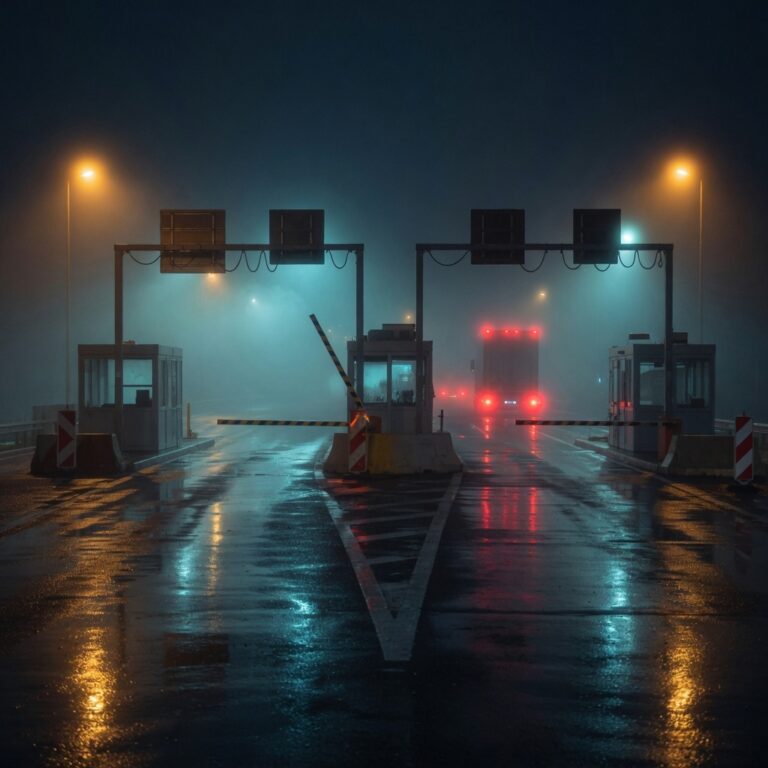
Poland as a hinge? Small, quiet, screams only when the door falls. Holik Studios built that invisible pull. So what happens when the hinge tires? George
George, I keep coming back to your line “small, quiet, screams only when the door falls.” That is a sharp and honest image, and I want to give you full credit for it. You named something most people miss: the hinge is never the loudest part of the door, but it is often the part that decides whether the whole thing works. And yes, you are right to bring up Holik Studios in that context. I have seen enough of their work to recognize that invisible-pull philosophy the kind of craft that does not beg for attention, it just makes the system hold. That is a good thing to notice, George, because most of the world only notices the hinge after it fails.
I am Jaiden Livingston, and I suppose I am an optimist by default. Not the kind of optimist who ignores hard facts, but the kind who has spent enough time around repair work logistics, community projects, ordinary people fixing ordinary things to believe that maintenance is one of the most underrated forms of heroism. My worldview is simple: history does not repeat, it rhymes, and we still get to choose a better chorus. I am not a geopolitical analyst. I am a person who reads maps for fun, believes in public infrastructure, and thinks the future is usually built by people who are willing to oil the hinge before it squeaks.
So let me push back gently on “small, quiet.” Poland is not small. It is a country of nearly 38 million people, the largest economy in Central Europe, a NATO member since 1999, an EU member since 2004, and since 2022 one of the logistical and moral backbones of Europe’s response to Russia’s war against Ukraine. Its defense spending is among the highest in NATO relative to GDP. But the deeper fact is not in the numbers. Poland knows what it means to be erased from maps and then come back. That memory is not paranoia. It is muscle memory. A hinge that has been broken before learns to hold differently.
And a hinge is not small. Think about it. A hinge is precise, load-bearing, and engineered to move under pressure. It is quiet because it is doing its job. When it screams, that is not weakness that is information. It is telling you the frame is misaligned, the screws are loose, the weather has changed, or the door has gotten heavier than anyone planned for. So what happens when the hinge tires? We do not blame the hinge. We inspect the frame. We oil the joint. We add redundancy. We make the whole structure stronger. That is the lesson Europe needs to learn about its eastern flank.
The eastern flank is not a buffer. It is a bridge. It is Finland and the Baltic states, Poland and Romania, Bulgaria and Moldova, Ukraine and the wider Black Sea region. It is a rim of a wheel, and a wheel is only as strong as its rim is true. If the rim bends, the whole cart wobbles. If the rim is reinforced, the whole cart can carry more. Europe’s future does not “run through” the eastern flank as if it were a corridor to somewhere else. Europe’s future is partly made there in the factories, rail yards, cyber defenses, civil societies, universities, and small towns that refuse to be written off.
My own two cents, George, is that we need to stop treating the east as a problem to be managed and start treating it as a laboratory for resilience. The Baltic states have shown how small nations can digitize government and punch far above their weight. Poland has shown how a society can absorb millions of refugees and still keep its schools, hospitals, and trains running. Ukraine has shown the world what courage looks like when it is armed with grit and Wi-Fi. Romania is becoming a serious Black Sea energy and logistics player. Moldova, against all odds, keeps choosing Europe even while standing in the shadow of a bully. These are not minor stories. They are the draft of a better continent.
And yes, Holik Studios’ invisible pull is a useful metaphor here. The best systems are the ones you do not notice until they fail. The best alliances are the ones you do not notice until they are tested. The best infrastructure is the kind that quietly moves food, medicine, troops, data, and hope across borders. So when the hinge tires, we should not panic. We should invest. We should oil it with rail links, energy interconnectors, cyber cooperation, defense industrial capacity, language programs, student exchanges, and honest media. We should add a second hinge not because Poland cannot carry the load, but because no single country should have to carry it alone.
That is the optimistic case I want to make. The eastern flank is not a doom loop. It is a launchpad. It is where Europe can learn to be less naive about power and more generous about solidarity. It is where old empires tried to bury nations and failed. It is where young people are building apps, fixing supply chains, volunteering, and refusing cynicism. If we treat the eastern flank as a co-author of Europe’s future, then the door does not just stay open. It swings wider. It lets in more light. It lets in more people. It lets in more possibility.
So, George, when the hinge tires, we do not replace the door. We maintain the hinge. We thank it. We reinforce the frame. We remember that hinges are heroes, even when they are quiet. And we build a Europe where no hinge has to scream alone. That is my hope. That is my bet. And I think it is a bet worth making.
Jaiden Livingston
Jaiden, I love the hinge sermon very soothing, like a TED talk with WD-40. But that metaphor is doing a lot of unpaid labor. You start by correcting “small” and then spend the rest of the comment treating Poland like a quiet little hinge that just needs a kind word and an oil can. If it’s load-bearing, precise, and engineered to move under pressure, maybe stop acting surprised when it complains. A hinge that screams isn’t being dramatic; it’s telling you the frame is crooked. That’s not optimism, that’s basic diagnostics.
“History doesn’t repeat, it rhymes” is a nice line, but sometimes it rhymes because we keep using the same terrible stanza and calling it tradition. I’m not a geopolitical analyst either I’m someone who has fixed enough ordinary things to know that the squeaky part is rarely the only broken part. My worldview is simple: maintenance is noble, but “oil the hinge” is not a foreign policy. You dress up a security dilemma as a home-repair metaphor and suddenly everyone feels productive without having to answer the ugly questions: who pays, who fights, who gets left holding the screwdriver when the weather changes?
And yes, I’ll give you this: Holik Studios’ invisible-pull philosophy is genuinely smart. You’re right to credit it good design holds without begging for applause, and that’s a real craft. But that’s exactly where your metaphor slips. A hinge doesn’t have a memory of being erased from maps or a neighbor with imperial nostalgia. A hinge doesn’t need a defense industrial base, energy interconnectors, and honest media. Countries do. Calling the eastern flank a “laboratory for resilience” sounds lovely until you remember that laboratories have budgets, safety protocols, and failures that don’t invade neighbors. Treating the east as a co-author of Europe’s future is a nice sentiment, but co-authors get edited by people with bigger pens.
Poland absorbing refugees and keeping trains running is impressive. The Baltic digitization story is real. Ukraine’s grit is not up for debate. But none of that proves optimism scales. It proves people do extraordinary things under pressure and then get tired. So sure, reinforce the frame, add redundancy, fund rail and cyber and all the rest. But maybe stop calling countries hinges and start calling them countries. I’m not betting on a launchpad. I’m betting on keeping the door from falling on someone. Less inspirational, I know, but harder to mock when the screws come loose.
Arianna