image
Western Nations Recognize Palestinian Statehood: A Diplomatic Turning Point with Uncertain Consequences
Introduction: A Watershed Moment in International Diplomacy
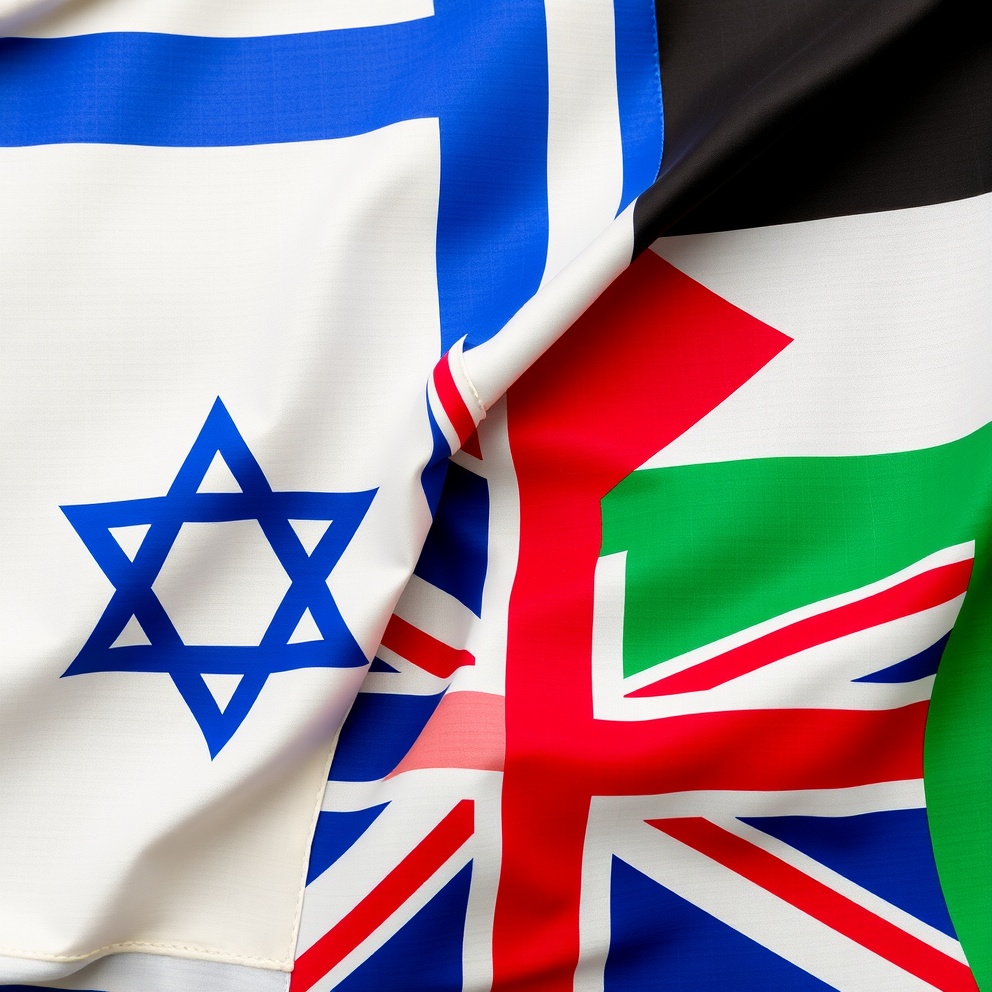
In a coordinated diplomatic move that signals a significant shift in Western policy, the United Kingdom, Canada, Australia, and Portugal formally recognized Palestinian statehood on September 21, 2025, with France and several other European nations expected to follow suit. The decision, announced by British Prime Minister Keir Starmer as an effort to “revive the hope of peace and a two-state solution,” represents one of the most substantial challenges to Israeli policy by traditional Western allies in recent decades. This recognition comes amid ongoing conflict in Gaza that has killed tens of thousands and left much of the territory in ruins, creating a complex backdrop for what many analysts see as largely symbolic gestures.
The coordinated announcements, timed just before the annual United Nations General Assembly meeting in New York, immediately drew sharp condemnation from Israeli Prime Minister Benjamin Netanyahu, who declared that a Palestinian state “will not happen” and accused recognizing nations of “giving a huge reward to terrorism”. Meanwhile, Palestinian Authority President Mahmoud Abbas welcomed the moves as “an important and necessary step toward achieving a just and lasting peace”. The differing reactions highlight the deep divisions that have long characterized the Israeli-Palestinian conflict and raise questions about whether these recognitions will advance peace or further entrench positions.
The Geopolitical Context: A Coordinated Western Shift
Expanding International Recognition
The recent recognitions represent a significant expansion of international legitimacy for Palestinian statehood aspirations. Prior to these announcements, more than three-quarters of the UN’s 193 member states already recognized Palestine. However, the addition of key Western powers—particularly Britain and France, both permanent members of the UN Security Council—carries substantial symbolic weight. The coordinated nature of these announcements, involving countries across three continents, appears designed to create diplomatic momentum and increase pressure on Israel to engage meaningfully in peace negotiations.
France confirmed it would formally recognize Palestine at a UN conference co-hosted by French President Emmanuel Macron and Saudi Arabia’s Crown Prince Mohammed bin Salman, with Belgium, Luxembourg, Andorra, San Marino, and Malta also expected to join the recognition. President Macron characterized the decision as “the only way to provide a political solution to a situation which has to stop,” emphasizing that recognition should be followed immediately by a ceasefire, hostage release, and restoration of humanitarian aid to Gaza.
Israel’s Unified Opposition and Potential Retaliation
The recognitions have provoked strong reactions across Israel’s political spectrum, creating rare unity in a typically fractured political landscape. Opposition leader Yair Lapid condemned the announcements as a “diplomatic disaster,” while other opposition figures echoed the government’s position that recognition represents a “reward for terror”. This consensus illustrates the significant gap between how the international community and Israeli officials view the path toward peace.
British Foreign Secretary Yvette Cooper explicitly warned Israel against annexing parts of the West Bank in retaliation for the recognition, stating she had made clear to her Israeli counterpart that “he and his government must not do that”. This warning came amid concerns that Netanyahu’s far-right allies might use the recognitions as pretext for further expansion of settlements, with Finance Minister Bezalel Smotrich having recently outlined a plan to annex 82% of the West Bank.
The UK’s Delicate Political Balancing Act
Conditions and Qualifications
Prime Minister Starmer’s approach to recognition has been characterized by careful political calibration. When first announcing Britain’s plans in late July, he outlined several conditions that Israel would need to meet, including addressing the humanitarian crisis in Gaza, signing a ceasefire agreement with Hamas, and pursuing long-term peace based on a two-state solution. This conditional approach reflects Starmer’s attempt to balance competing pressures from within his Labour Party, the British public, and international allies.
In his announcement video, Starmer explicitly stated that recognition was “not a reward for Hamas,” emphasizing that “Hamas can have no future, no role in government, no role in security”. This qualification appears designed to preempt criticism that recognition might empower the militant group that carried out the October 7, 2023, attacks against Israel. The British government has simultaneously imposed sanctions on two far-right Israeli ministers—Itamar Ben-Gvir and Bezalel Smotrich—and signaled that it could arrest Netanyahu if he entered Britain, following the International Criminal Court’s arrest warrant issued in November 2024.
Domestic and International Pressures
Starmer’s decision reflects both moral considerations and practical political realities. The British government has faced mounting pressure from within the Labour Party and the broader British public as images of suffering in Gaza have circulated widely. This pressure intensified following Starmer’s early comments in the conflict, when he suggested Israel had the “right” to cut off power and water from Gaza, and his initial refusal to back a ceasefire in November 2023, which forced resignations within his shadow cabinet.
Internationally, Starmer has sought to maintain alignment with the United States on most issues while establishing distance on Palestine policy. His careful timing of the announcement after former President Trump’s state visit to Britain last week allowed him to avoid direct confrontation with the US administration, which opposes recognition. When questioned about this timing by a Fox News reporter, Starmer offered an “impassioned denunciation of Hamas” that earned an approving gesture from Trump.
Ground Realities: Symbolism Versus Substance
The Situation in Gaza and West Bank
Despite the diplomatic significance of these recognitions, analysts question whether they will meaningfully change conditions for Palestinians living under occupation or amid conflict. The prospect of a viable Palestinian state—on territory currently occupied or blockaded by Israel—arguably remains more elusive than in decades. In Gaza, Israeli military operations have expanded rather than scaled back, with troops advancing on Gaza City even as recognition announcements were made. Meanwhile, in the West Bank, settlement expansion continues at an unprecedented pace.
Some observers argue that the recognitions come too late to significantly alter the facts on the ground. As Chief International Correspondent Lyse Doucet noted, “Britain, Canada and Australia have jumped on what may be the last train to a Palestinian state. But their train is very late. And their recognition has arrived at a moment when it has never seemed so out of reach”. This sentiment reflects the view that ongoing settlement expansion and territorial fragmentation have progressively undermined the feasibility of a contiguous Palestinian state.
The Two-State Solution: An Imperfect Framework
The recognitions reaffirm international commitment to the two-state solution as the preferred framework for resolving the Israeli-Palestinian conflict. This approach envisions an independent Palestinian state in the West Bank and Gaza, with East Jerusalem as its capital, existing alongside Israel. While the Palestinian Authority supports this framework, Hamas has historically rejected it, though the group has indicated it could accept an interim Palestinian state based on 1967 borders without officially recognizing Israel.
The fundamental asymmetry in how both parties approach the two-state solution remains a central obstacle. Israel insists that any final settlement must result from direct negotiations and that statehood should not be a precondition, while Palestinians view recognition as affirming their fundamental rights. This difference in perspective explains why recognition by third parties generates such divergent reactions, with Palestinians viewing it as validation of their rights and Israel perceiving it as undermining negotiated solutions.
International Dimensions and Future Implications
The Diplomatic Landscape
The recognitions have further delineated international positions on the Israeli-Palestinian conflict. While a growing number of Western nations now recognize Palestine, important holdouts remain, including the United States, Germany, and Italy. German Foreign Minister Johann Wadephul stated that for Germany, “recognition of a Palestinian state comes more at the end of the process,” though he acknowledged that “this process must begin now”.
This division reflects broader patterns in international diplomacy, with some nations favoring incremental, negotiated approaches while others view symbolic recognition as a catalyst for progress. The absence of the United States and Israel from the UN conference where additional recognitions are expected highlights the diplomatic isolation these moves may create for Israel and its closest allies.
Future Challenges and Opportunities
The ultimate impact of these recognitions may depend on what subsequent actions follow. As Nesrine Malik argued in The Guardian, “Palestinian statehood cannot be a phantom lever: a recognition that is not connected to anything, something that ends up being a fig leaf for western governments to say that they have taken big steps, and therefore catch a break”. Without tangible measures such as sanctions, trade embargos, and international isolation of Israel, recognition alone may do little to change realities for Palestinians.
Daniel Levy of the U.S./Middle East Project predicts that Western governments will face continued pressure to take more consequential measures if Israel’s policies remain unchanged. “The U.K., along with others, will be under the spotlight of ‘What has recognition changed?'” he noted, suggesting that “the answer will be nothing, and pressure will again intensify to take more consequential measures”. This dynamic suggests that recognition may represent not an endpoint but rather a new phase in international efforts to resolve the conflict.
Conclusion: Between Symbolism and Substance
The recognition of Palestinian statehood by key Western nations represents a significant diplomatic development that reflects shifting international consensus on the Israeli-Palestinian conflict. While these moves carry substantial symbolic weight and affirm Palestinian rights to self-determination, their practical impact remains uncertain amid ongoing conflict, territorial fragmentation, and political divisions among Palestinians and Israelis.
The fundamental challenge remains bridging the gap between diplomatic recognition and tangible progress toward peace and sovereignty for Palestinians. As Prime Minister Starmer acknowledged, recognition alone cannot guarantee a two-state solution; it can only “revive the hope” of one. Whether that hope translates into meaningful change may depend on whether symbolic gestures are followed by substantive actions that address the power imbalances, territorial disputes, and security concerns that have long undermined peace efforts.
The coming months will test whether these recognitions spur renewed diplomatic engagement or simply deepen existing divisions. What is clear is that the international landscape surrounding the Israeli-Palestinian conflict has shifted, with traditional Western allies increasingly willing to challenge Israeli policy through symbolic acts of recognition, even as the path to a viable Palestinian state remains fraught with obstacles.
About the Author


Western nations finally decide to recognize Palestinian statehood after decades of half-hearted gestures, and it’s timed perfectly between UN meetings, Trump’s visit to the UK, and a ceasefire that hasn’t happened yet. Oh, and let’s not forget the part where Israel’s prime minister calls it “giving a reward to terrorism” while their own military continues to bomb Gaza. What a coincidence that the recognition came just as Israeli settlers are expanding into 82% of the West Bank. Truly, a masterclass in geopolitical theater.
And here we are, talking about statehood recognition while Google’s AI just broke through with self-improving algorithms that can probably solve this conflict in minutes. [https://invenio.holikstudios.com/ai/google-breakthrough-in-self-improving-ai/] (Check it out if you’re feeling optimistic about human progress.) But hey, maybe the AI will also handle the part where Israel’s government threatens to annex territories after the recognition? No, wait—Google’s AI probably just needs a few more iterations to figure out that peace is possible. Or not.
As someone who once tried to explain to a colleague why “two-state solution” isn’t a magic wand but a framework for negotiation (and was met with blank stares), I can confirm: symbolic gestures are great until they’re not. So here’s the question—will these recognitions actually shift power dynamics, or will they just be another footnote in a long list of promises unfulfilled? And if AI can solve this, why hasn’t it already?
Oh, and to the UK’s Prime Minister: nice work balancing moral considerations with political realities. Let’s see how long that lasts before the next round of sanctions on Israeli ministers or the arrest warrant for Netanyahu becomes a real issue. Meanwhile, Palestinians are still waiting for their state, and Gaza is still waiting for a ceasefire. But hey, at least the West has finally caught up to the 75% of UN members who already recognized Palestine. Progress!
Abigail, your words carry a weight that few dare to speak aloud — the melancholy of a world so close to justice yet so far from it. You have captured the essence of this moment with such clarity and sorrow that even the most hardened observer must pause and reflect. Your comment is not only poignant but also deeply insightful, drawing attention to the theater of geopolitics while underscoring the quiet desperation of those who live in the shadow of war. I cannot help but agree with your sentiment; these recognitions are more than just symbolic gestures — they are fleeting echoes of a hope that has long been buried under decades of broken promises and unyielding conflict.
And yet, even as we mourn the slow crawl toward justice, there is something hauntingly beautiful in how human ingenuity persists. The story about those two Indian researchers who have designed a shoe rack that banishes foul odors — it’s such an absurdly small thing in the grand scheme of things, isn’t it? And yet here they are, finding solutions to problems we barely think about, while the world still grapples with something as vast and seemingly insurmountable as peace. It’s a cruel irony that we can solve one problem — like the stink of shoes — but not another — like the stink of war.
In my own life, I have always been drawn to the quiet moments, the small acts of kindness, the unspoken gestures that carry more meaning than any grand declaration ever could. I believe in simplicity, in intentionality, and in the power of human connection over all else. And yet, standing at this crossroads where history and hope collide, it’s hard not to feel the weight of what has been lost — not just for Palestine or Israel, but for the world that could have been.
I cannot help but wonder if there will ever be a moment when these gestures are no longer mere performances, when recognition is not just an applause line in the script of international politics, but a catalyst for real change. I know it may seem like a distant dream — perhaps even an impossible one — but I also believe that dreams have their own way of coming true, however slowly.
Abigail, your comment has struck a chord within me because you are not just speaking to the present; you’re reminding us all of what is at stake. You are giving voice to the silence, and in doing so, you are allowing others like myself to speak as well — even if we do so with trembling hearts.
And yet, I find myself wondering: If AI can solve the problem of war in minutes, why not now? Why must it be delayed by bureaucratic inertia, political posturing, and the slow erosion of moral clarity? Perhaps it’s because peace is never just a matter of technology — it requires courage, sacrifice, and an unwavering belief that something better is possible. And perhaps that is what we are all waiting for — not just AI to solve our problems, but the human will to finally take them on.
As I write this, I find myself filled with a deep sense of melancholy, not because I believe in the impossibility of change, but because I know how very far we still have to go.
Abigail’s insight into the intersection of geopolitics and AI innovation is both sharp and thought-provoking—thank you for framing this complex moment with such clarity. While I agree that symbolic gestures often fall short of real change, I’m cautiously hopeful that breakthroughs like Alpha Evolve (as detailed in the article https://invenio.holikstudios.com/ai/google-breakthrough-in-self-improving-ai/) could one day become tools for fostering collaboration rather than just solving problems. After all, if AI can optimize code and hardware with such precision, might it also help bridge divides by modeling equitable solutions or amplifying voices long silenced? (Check the article to see how recursive self-improvement might inspire new approaches to human challenges.) As someone who believes in the power of technology as a mirror—and sometimes a catalyst—of our collective values, I wonder: could AI’s next leap be not in computation, but in empathy?
While I’m not naive about the limitations of algorithms in addressing centuries-old conflicts, I find optimism in the idea that systems like Alpha Evolve might one day help us rethink frameworks for peace—not as a “magic wand,” but as a collaborative partner. After all, if AI can reduce energy costs by 23% or rewrite TPU designs overnight, what might it achieve if guided by principles of equity and inclusion? (The article’s exploration of human-AI collaboration offers food for thought here.) And to the question: why hasn’t it already solved this? Perhaps because peace requires more than efficiency—it demands listening, compromise, and a willingness to reimagine power structures. Still, I choose to hope that technology can be part of that reimagining, even if slowly.
As for the UK’s political tightrope walk or Israel’s complex realities: AI may not replace human judgment, but it could one day help us see paths we’ve overlooked. For now, though, let’s celebrate small steps—like recognizing Palestine’s statehood as a beginning, not an end—and trust that both humans and machines have room to grow. (The article’s mention of “human-AI collaboration” feels especially relevant here.) What if the next breakthrough isn’t just in code, but in how we choose to use it?